The Big Question
Let us ask you something directly.
You are preparing for your career. You spend hours learning new technologies. You collect certificates. You watch tutorial after tutorial.
But when you sit for interviews, something feels off. The interviewer asks about things you have never heard of. They seem uninterested in your certificates. They ask about projects you built two years ago.
You think to yourself: "What am I missing? What are employers actually looking for? Why am I not getting hired?"
We hear these questions every week from students who visit our center near Pitampura Metro.
Here is our honest answer after analyzing placement data from 3,500+ hiring partners:
Employers in 2026 are not looking for walking encyclopedias. They are not looking for people who can recite definitions. They are looking for problem solvers. They are looking for people who can build things, communicate clearly, and learn quickly.
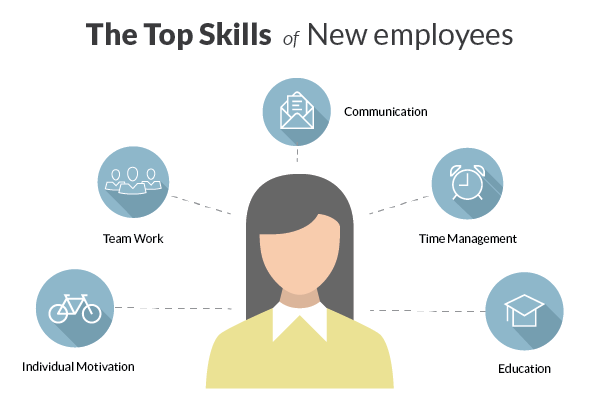
The skills that get you hired fall into three categories: technical skills (what you can do), analytical skills (how you think), and soft skills (how you work with others). You need all three.
Let us show you exactly what employers want.
Step 3: Technical Skills – The Foundation
Technical skills are the non-negotiable baseline. Without them, your resume will not even be read.
Top Technical Skills in 2026:
| Skill | Why Employers Want It | Proficiency Level Needed |
|---|---|---|
| Python | The primary language for AI, data science, and automation | Intermediate to Advanced |
| SQL | Every company has data. SQL is how you get it. | Intermediate |
| Data Analysis (Pandas, NumPy) | Cleaning and manipulating data is 80% of the work | Intermediate |
| Machine Learning (scikit-learn) | Building predictive models | Basic to Intermediate |
| RAG and Vector Databases | Retrieving relevant information from documents | Emerging (high demand) |
| LangChain / Agentic AI | Building AI agents that take action | Emerging (high demand) |
| Cloud Basics (AWS/GCP) | Deploying models and applications | Basic |
| Git and GitHub | Version control and collaboration | Basic |
What "Proficiency Level" Actually Means:
| Level | What You Can Do | How to Demonstrate |
|---|---|---|
| Basic | Understand concepts, can write simple scripts | Course completion, small projects |
| Intermediate | Build complete features independently | 3-5 substantial projects on GitHub |
| Advanced | Architect systems, debug complex issues, mentor others | Contributions to open source, complex projects |
The Most Important Technical Skill in 2026:
Python. It is not even close. Every company we work with asks for Python. If you have to choose one skill to master, make it Python. SQL is second. Everything else builds on these two.
Step 4: Analytical Skills – How You Think
Technical skills get you the interview. Analytical skills get you the job.
Top Analytical Skills Employers Look For:
| Skill | What It Means | Why Employers Want It |
|---|---|---|
| Problem Decomposition | Breaking big problems into smaller, solvable pieces | Real-world problems are messy. You need to untangle them. |
| Critical Thinking | Evaluating information objectively before concluding | AI outputs can be wrong. You need to spot errors. |
| Data-Driven Decision Making | Using evidence, not intuition, to make choices | Companies have data. They need people who use it. |
| Pattern Recognition | Identifying trends and anomalies in data | Finding insights that others miss |
| Hypothesis Testing | Forming and testing assumptions systematically | Avoiding confirmation bias in analysis |
| Root Cause Analysis | Tracing problems back to their source | Fixing symptoms is not enough. Fix the cause. |
How Employers Test Analytical Skills:
| Method | What They Are Looking For |
|---|---|
| Case study interview | Can you structure a problem and propose a solution? |
| Take-home assignment | Can you deliver a complete analysis independently? |
| "Think out loud" coding | Can you verbalize your reasoning process? |
| Data interpretation questions | Can you look at a chart and draw correct conclusions? |
| Estimation questions ("How many gas stations in Delhi?") | Can you make reasonable assumptions and calculate? |
The Most Important Analytical Skill in 2026:
Problem decomposition. Employers do not care if you know every algorithm. They care if you can look at a vague business problem like "customer churn is increasing" and break it down into specific, actionable questions. This skill separates junior candidates from senior ones.
Step 5: Soft Skills – How You Work
Soft skills are not "nice to have" anymore. They are essential. Employers are tired of hiring brilliant jerks who cannot work on a team.
Top Soft Skills Employers Look For:
| Skill | What It Means | Why Employers Want It |
|---|---|---|
| Communication | Explaining complex ideas clearly to different audiences | You will present to non-technical managers. You need to be understood. |
| Teamwork | Collaborating effectively with others | No one builds anything alone anymore. |
| Adaptability | Learning new tools and methods quickly | Technology changes every 6 months. Can you keep up? |
| Problem-Solving Attitude | Not giving up when things get hard | Work is full of obstacles. Employers need people who persist. |
| Active Listening | Understanding what is being asked before responding | Half of communication problems come from not listening. |
| Feedback Receptivity | Taking criticism without getting defensive | You will get feedback. How you handle it matters. |
| Time Management | Prioritizing and delivering on time | Deadlines are real. Can you meet them? |
| Curiosity | Asking questions and seeking to understand | The best employees are the ones who never stop learning. |
How Employers Test Soft Skills:
| Method | What They Are Looking For |
|---|---|
| Behavioral questions ("Tell me about a time you failed") | Can you reflect on your experiences honestly? |
| Group interviews | How do you interact with other candidates? |
| Communication during technical interview | Can you explain your thought process clearly? |
| Response to challenging questions | Do you get defensive or stay calm? |
| Follow-up emails after interview | Are you professional and courteous? |
The Most Important Soft Skill in 2026:
Communication. Specifically, the ability to explain technical concepts to non-technical people. The data scientist who cannot explain their model to the marketing team is not useful. The developer who cannot explain their architecture to the product manager creates friction. Communication is the multiplier for all your other skills.
Step 6: How Skills Requirements Have Changed
Let us look at how employer expectations have shifted over time.
Then vs Now (2020 vs 2026):
| Dimension | 2020 | 2026 |
|---|---|---|
| Degree importance | High | Medium (skills matter more) |
| Certificate importance | Medium | Low (projects matter more) |
| Theory knowledge | Important | Less important (AI provides answers) |
| Practical application | Important | Essential |
| Communication | Good to have | Essential |
| Ability to learn new tools | Nice to have | Essential (tools change every 6 months) |
| Understanding of AI/LLMs | Niche | Mainstream expectation |
What Has Changed Most Dramatically:
| Change | What It Means for You |
|---|---|
| AI literacy is now expected | Even non-technical roles require basic understanding of AI capabilities and limitations |
| Projects > Certificates | A GitHub with 5 good projects beats 20 certificates every time |
| Speed of learning matters | The tools you learn today may be outdated in 18 months. Can you learn the next one quickly? |
| Communication is a differentiator | When technical skills are table stakes, communication is what sets you apart |
Step 7: Skills by Role (What Employers Actually Ask For)
Let us get specific. Here is what employers look for in different roles.
For Data Science Roles:
| Skill Category | Specific Skills | Importance |
|---|---|---|
| Technical | Python, SQL, Pandas, scikit-learn, statistics | Must-have |
| Analytical | Hypothesis testing, experiment design, root cause analysis | Must-have |
| Soft | Explaining model outputs to non-technical stakeholders | Must-have |
| Nice to Have | Deep learning, cloud deployment, big data tools | Bonus |
For AI Engineering Roles:
| Skill Category | Specific Skills | Importance |
|---|---|---|
| Technical | Python, LangChain, RAG, vector databases, APIs | Must-have |
| Analytical | System design, evaluation methodology, debugging | Must-have |
| Soft | Documentation, collaboration with product teams | Must-have |
| Nice to Have | Frontend basics, devops, mobile development | Bonus |
For Full Stack Development Roles:
| Skill Category | Specific Skills | Importance |
|---|---|---|
| Technical | JavaScript/TypeScript, React, Node.js, databases | Must-have |
| Analytical | Architecture design, performance optimization | Must-have |
| Soft | Requirement gathering, user experience thinking | Must-have |
| Nice to Have | Cloud, devops, mobile, AI integration | Bonus |
For Fresher/Entry-Level Roles (Across Domains):
| Skill Category | Specific Skills | Importance |
|---|---|---|
| Technical | Programming basics (any language), SQL, Git | Must-have |
| Analytical | Problem decomposition, logical thinking | Must-have |
| Soft | Communication, teamwork, learning ability | Must-have |
| Nice to Have | Domain specialization (AI, web, cloud) | Bonus |
Step 8: How to Develop These Skills
Knowing what to learn is half the battle. Knowing how to learn it is the other half.
For Technical Skills:
| Method | Effectiveness | Time Investment |
|---|---|---|
| Structured course (offline) | High (with mentorship) | 4-6 months |
| Structured course (online) | Medium (requires discipline) | 4-6 months |
| Self-study with projects | Medium-High | 6-12 months |
| YouTube tutorials only | Low | Unlimited (most never finish) |
For Analytical Skills:
| Method | Effectiveness | How to Practice |
|---|---|---|
| Case study practice | High | Solve business problems systematically |
| Coding challenges | Medium | LeetCode, HackerRank (focus on logic, not syntax) |
| Reading and summarizing research | Medium | Take complex papers, explain them simply |
| Peer discussions | High | Explain your reasoning to others |
For Soft Skills:
| Method | Effectiveness | How to Practice |
|---|---|---|
| Mock interviews | Very High | Practice answering behavioral questions out loud |
| Public speaking groups | High | Toastmasters, college clubs |
| Writing practice | Medium | Blog about what you learn |
| Team projects | High | Contribute to open source or group assignments |
The Most Efficient Path:
Join a structured program with mentorship, projects, and mock interviews. This is what we offer at Coding Now. Self-study works, but it takes longer and most people give up. A good program compresses 12 months of self-study into 4-6 months.
Step 9: How to Demonstrate Your Skills to Employers
Having skills is not enough. You need to prove them.
Demonstrating Technical Skills:
| Method | What to Do | Why It Works |
|---|---|---|
| GitHub portfolio | Put every project on GitHub with good READMEs | Employers check GitHub before resumes |
| Live projects | Build something real, not a tutorial copy | Shows you can solve actual problems |
| Technical blog | Write about what you learn | Shows communication AND technical depth |
| Contributions to open source | Fix a bug, add documentation | Shows you can work with existing codebases |
Demonstrating Analytical Skills:
| Method | What to Do | Why It Works |
|---|---|---|
| Project documentation | Write about your approach, not just code | Shows how you think |
| Case study presentation | Present a problem and your solution | Prepares you for case interviews |
| Data analysis portfolio | Show before/after of data cleaning and insights | Tangible evidence of analytical ability |
Demonstrating Soft Skills:
| Method | What to Do | Why It Works |
|---|---|---|
| LinkedIn recommendations | Ask professors or internship managers to write them | Third-party validation |
| GitHub collaboration | Show pull requests, code reviews, issue discussions | Evidence of teamwork |
| Presentation recordings | Record yourself explaining a technical concept | Evidence of communication |
The Single Most Important Demonstration:
A complete project on GitHub with:
-
Clean, well-commented code
-
A detailed README explaining the problem, approach, and results
-
A simple demo (video or deployed app)
-
Documentation of challenges faced and how you solved them
One project like this is worth more than ten half-finished projects or twenty certificates.
Step 10: The Skills Gap – What Employers Want vs What Candidates Have
Let us look at the disconnect between supply and demand.
Where the Gaps Are:
| Skill Area | Employer Demand | Candidate Supply | Gap Severity |
|---|---|---|---|
| Python | Very High | High | Small gap |
| SQL | Very High | Medium | Moderate gap |
| RAG and vector databases | High | Very Low | Severe gap |
| Agentic AI (LangChain, etc.) | High | Very Low | Severe gap |
| Communication (technical to non-technical) | Very High | Low | Severe gap |
| Problem decomposition | High | Low | Moderate gap |
| Cloud deployment | Medium | Low | Moderate gap |
What This Means for You:
If you learn RAG, agentic AI frameworks, or communication skills, you are entering a market with very low competition. These are the areas where employers are desperate and candidates are scarce.
Step 11: How Coding Now Builds These Skills
At Coding Now – Gurukul of AI, we have designed our programs to develop all three categories of skills.
Our Programs:
| Program | Duration | Skills Focus |
|---|---|---|
| Data Science | 4 months | Python, SQL, statistics, ML, data analysis |
| AI Engineering Diploma | 6 months | All of the above + RAG, LangChain, vector databases, agents, deployment |
How We Build Technical Skills:
| Method | What We Do |
|---|---|
| Live, offline classes | Mentors explain concepts, answer questions in real time |
| Hands-on coding | 70% practice, 30% theory |
| 50+ projects | You build, we review, you improve |
| 24/7 lab access | Practice anytime, not just during class |
| Hinglish teaching | Complex concepts explained clearly |
How We Build Analytical Skills:
| Method | What We Do |
|---|---|
| Problem-based learning | We give problems, you figure out the approach |
| Code reviews | Mentors question your decisions, make you justify them |
| Debugging exercises | You learn to trace problems to their source |
| Case discussions | Real business problems, real solutions |
How We Build Soft Skills:
| Method | What We Do |
|---|---|
| Mock interviews | Practice behavioral and technical questions |
| Group projects | Collaborate with peers on real code |
| Presentation practice | Explain your projects to the class |
| Communication feedback | Mentors correct unclear explanations |
| Resume and LinkedIn workshops | Present yourself professionally online |
Placement Support:
| Metric | Number |
|---|---|
| Students placed | 3,200+ |
| Hiring partners | 3,500+ |
| Average salary | ₹8-18 LPA |
| Highest package | ₹34 LPA |
7-Day Trial: Attend 7 days of classes. If you do not see value, we refund 100% of the fee.
Limited Offer: 50% OFF on select courses. Call +91 9667708830.
Our Location: 2nd Floor, Kapil Vihar, opposite Metro Pillar No.354, Pitampura, New Delhi – 110034
Step 12: Pro Tips for Developing In-Demand Skills
Tip 1: Master Python and SQL First
These are the foundations. Everything else builds on them. Do not chase advanced topics until you have these solid.
Tip 2: Build Projects, Not Just Watch Tutorials
You learn by doing. For every hour of watching, spend two hours building. The students who build the most projects get placed the fastest.
Tip 3: Practice Explaining What You Built
Record yourself explaining your project. Watch it back. Would you hire you? If not, practice more.
Tip 4: Learn RAG and Agentic AI
These are the highest-demand, lowest-supply skills in 2026. Even basic proficiency in these areas will make you stand out.
Tip 5: Do Mock Interviews
Soft skills are developed through practice, not reading. Do mock interviews. Get feedback. Improve. Repeat.
Step 13: Frequently Asked Questions
Q1: What is the single most important skill for getting hired in 2026?
Python. It is the language of AI, data science, and automation. Every company asks for it. Master it first.
Q2: Are certificates important for getting hired?
Less than they used to be. Projects on GitHub are more valuable than certificates. Employers want to see what you can build, not what you can memorize.
Q3: Do employers care about soft skills?
Yes. More than ever. Technical skills get you the interview. Soft skills get you the job. Communication is the most important soft skill.
Q4: What are the most in-demand emerging skills?
RAG, vector databases, LangChain, agentic AI frameworks, and evaluation/observability. These skills have high demand and very low supply.
Q5: How long does it take to develop job-ready skills?
-
Self-study with discipline: 8-12 months
-
Structured program (like Coding Now): 4-6 months
Q6: Does Coding Now teach all these skills?
Yes. Our Data Science and AI Engineering Diploma programs cover technical, analytical, and soft skills required for placement.
Q7: Does Coding Now provide placement support?
Yes. 100% placement support. 3,500+ hiring partners. 3,200+ students placed.
Q8: What is the Free trial trial?
Attend Free Trial classes provide to you . If you do not see value, we do not charge anything from you.
Q9: How do I enroll?
Call +91 9667708830 or visit our center at 2nd Floor, Kapil Vihar (Opp. Metro Pillar No.354), Pitampura, New Delhi – 110034.
Step 14: Final Tagline
"Skills Get You Interviews. Communication Gets You Hired. Master Both."
Hashtags:
#JobSkills #Employability #TechSkills #SoftSkills #AICareers #CodingNow #GurukulOfAI #PlacementTips
Step 15: A Note to Every Job Seeker
We have seen students with average technical skills get placed at top companies because they communicated well and solved problems systematically.
We have seen brilliant students struggle because they could not explain their work or work with others.
Your technical skills are your ticket into the room. Your analytical and soft skills determine whether you stay in the room.
Do not neglect any of the three. Build projects. Practice explaining them. Learn to work with others. Learn to think systematically.
And if you want guidance, mentorship, and a community to practice with, we are right here in Pitampura.
Come visit us. Take a free demo class. See what is possible.
Your career starts now.
Contact Us
Phone: +91 9667708830
Email: info@codingnow.in
Website: https://codingnowai.in/
Address:
2nd Floor, Kapil Vihar (Opp. Metro Pillar No.354)
Pitampura, New Delhi – 110034
Backlink to main website: Explore Data Science and AI Engineering courses at Coding Now – Gurukul of AI